Ktesio Rotterdam, NL
Agentic AI that holds up in production.
Ktesio is a software company in Rotterdam. I build and review agentic AI and platform systems for teams taking them into production, especially in regulated environments.
I also write Hekma, the open-source control plane for agent workloads: one way to run, see and steer AI agents. Today it supervises them, meters every run and holds them to a budget.


The person you talk to is the person who does the work. Islam Magdy, founder About
An example night in production claims-triage
- token spend 3× normal signalled, kept going
- tool called 9 times in a row loop broken at 5
- provider timeout, 30 s fallback model
- answer below eval bar sent for review
- PII in a draft reply blocked · open
5 events · 4 handled · nobody woken up
At a glance
- Three offerings
- Architecture and readiness review, agentic AI build, fractional technical lead.
- Scoped first
- Every engagement is a defined deliverable, agreed before work starts.
- Hekma v0.11.0
- The open-source control plane for agent workloads, in Rust. Apache-2.0.
- Remote, incl. US hours
- 19:00–22:00 in Amsterdam is 13:00–16:00 US Eastern.
01Offerings
What I deliver
Every engagement is a defined deliverable, agreed before work starts. If the scope isn’t clear yet, the review is the place to start.
Start from your situation
- “The demo works. Production is a different animal.”
- The build, or the review first if the design is still moving.
- “We need an independent read before we commit the budget.”
- The review. Written, prioritized, and yours to act on with or without me.
- “Compliance is asking questions the vendor’s agent platform can’t answer.”
- The review, scoped to the governance questions: who can do what, what is logged, and what stops it.
- “An agent spent three times its token budget last night, and nobody noticed until the invoice.”
- The review, on metering and controls. Hekma may be part of the answer; the assessment says whether it is.
- “Nobody here has run agents in production yet.”
- The fractional technical lead: standing architecture review and design calls until your team has.
- “We don’t know yet what we need.”
- The review, scoped to find out. Working it out is often the first piece of work.
-
Architecture and readiness review
A written assessment of an agentic AI or platform setup, with prioritized recommendations.
- Fits when
- You want an independent read before you commit budget or go live, or something already went wrong at three in the morning.
- Starts with
- Access to the setup and two conversations: one with the people who built it, one with the people who carry the pager.
- You end with
- A written assessment and a prioritized list of what to change.
-
Agentic AI build
An agent, pipeline, eval harness or integration, specified up front and delivered.
- Fits when
- You know roughly what the agent should do, and it has to survive production: audits, budgets, on-call.
- Starts with
- A written scope: the deliverable, what done means, and the end date.
- You end with
- The specified deliverable, handed over with what your team needs to run it.
-
Fractional technical lead
Architecture review, design calls and unblocking, mostly async.
- Fits when
- Your team ships agents and nobody on it has run them in production in a regulated setting.
- Shape
- A standing cadence, agreed a quarter at a time, with design calls when a decision needs one.
- You end with
- Decisions made and written down, designs reviewed before they are built, blockers cleared.
Across all three: platform engineering, agentic AI, solutioning, architecture reviews and engineering leadership.
02Engagements
How engagements work
- Scope agreed
- Build or review
- Handover
-
Scope first.
We agree the deliverable and the end date before work starts. If the scope isn’t clear yet, the first engagement works it out.
-
Own methods, own tools.
Ktesio works with its own methods, tools and equipment.
-
Outcome, not schedule.
Work runs to the agreed outcome, not a fixed schedule. Most of it is async.
-
Remote, including US hours.
19:00–22:00 in Amsterdam is 13:00–16:00 US Eastern.
What I’ve built
What Ktesio has built, with the screens as they are today. Every line here is a fact you can check on the product’s own site or in its repository, and the caption under each screen says where it comes from.
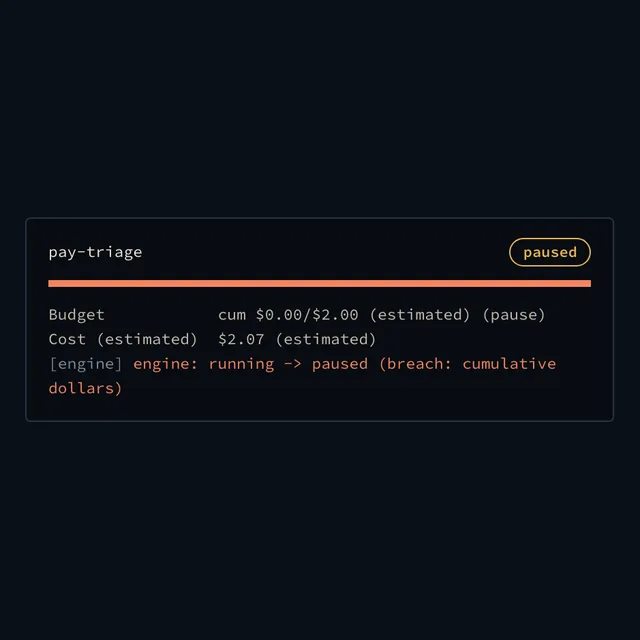
hekma.ktesio.dev · what ships today
Hekma
Open source
A control plane for agent workloads: it supervises the agents you run, meters each run’s real token use and enforces budgets the moment they’re crossed. Runs and Policies are being built in the open.
- Built with
- Rust, as one binary for macOS, Linux and Windows, with SQLite for durable state and a loopback proxy on the model traffic for metering. Apache-2.0.
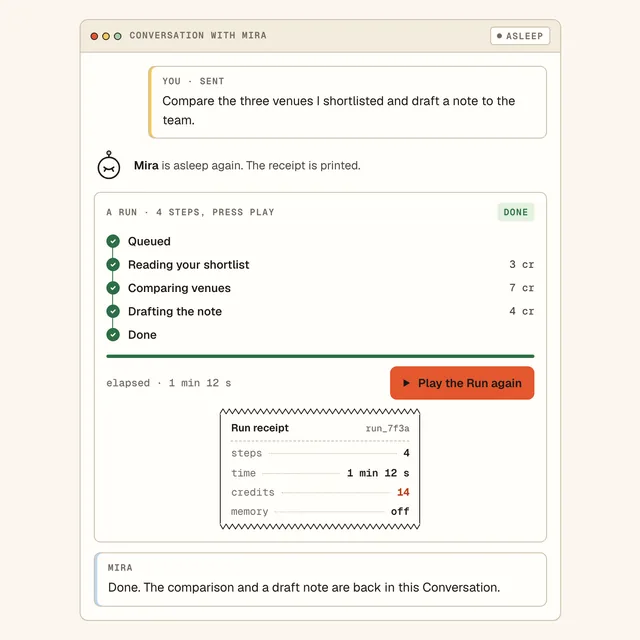
heronis.run · the example Run
Heronis
Not open yet
A private AI agent that shows its work: every request becomes a Run, with its steps on a timeline and its cost on a receipt, under a cap you set.
- Built with
- A managed service: each agent lives in a space of its own, with memory off until you switch it on, and support can’t read your Conversations unless you choose to share them.
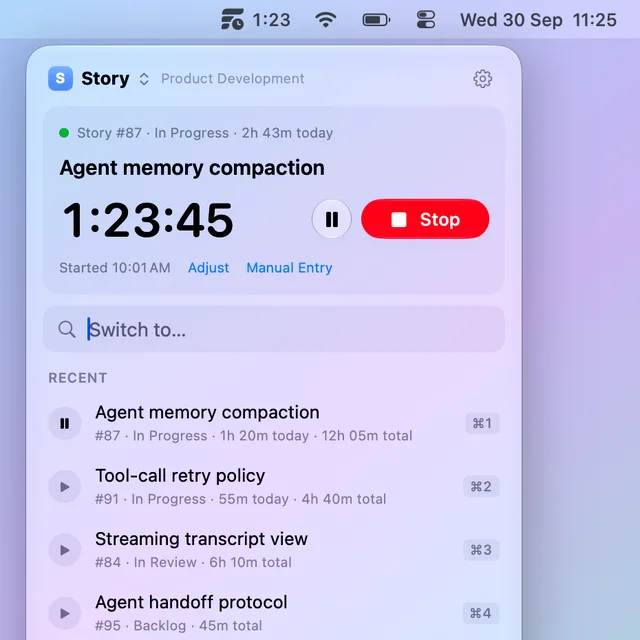
getfibers.app · a timer running
Fibers
Coming to the Mac App Store
A Mac menu-bar timer whose every session is a record in your own Fibery workspace: no second tool, no Fibers account, no server of mine in between.
- Built with
- A Mac app that talks to Fibery’s own MCP server straight from your Mac, keeps your sign-in in the macOS Keychain and stores nothing of yours anywhere else.
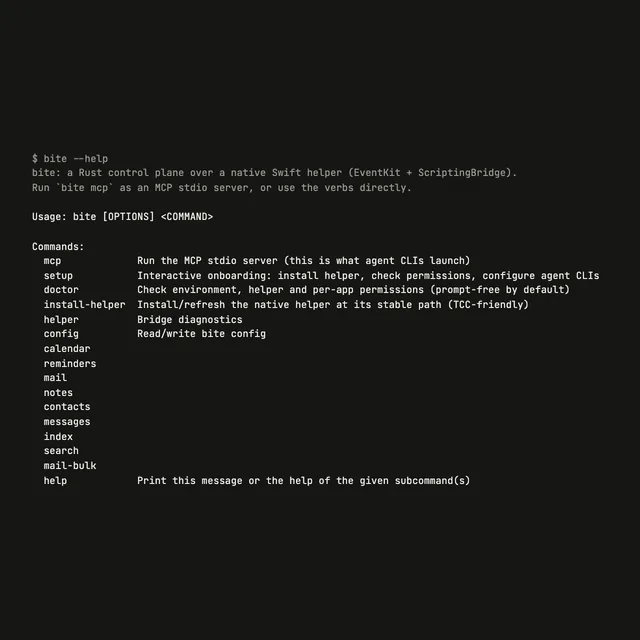
Terminal · bite --help
bite
Open source
Apple’s own apps, Calendar, Reminders, Mail, Notes, Contacts and Messages, as MCP tools for AI agents, each with a matching CLI verb, through Apple’s own frameworks and with no network calls of its own.
- Built with
- A Rust control plane and MCP server, with a native Swift helper over EventKit, Contacts and ScriptingBridge, and a local search index. MIT.

App Store · the first screenshot
Inkube
On the App Store
A finished game through App Store review, on iPhone and iPad: a swipe-and-merge ink puzzle with one rule, a daily board and a worldwide Game Center leaderboard.
- Built with
- For iPhone and iPad, playable offline with no account. Game Center, Apple’s in-app purchases and Google’s ads SDKs, as its privacy statement lists.
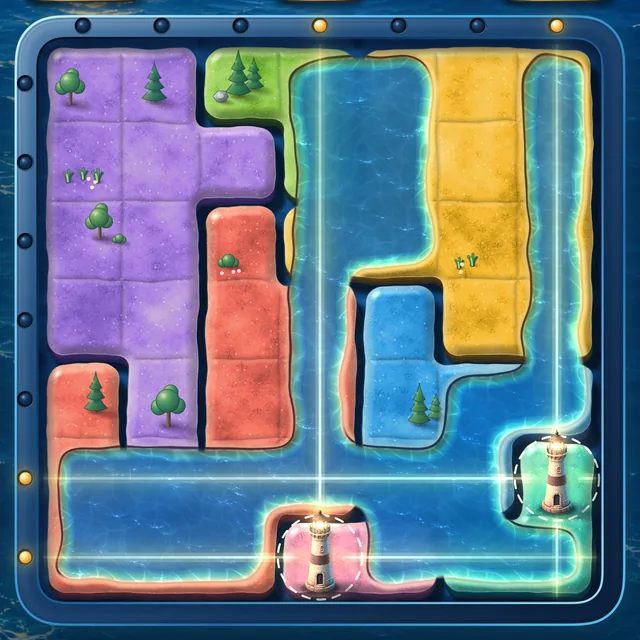
astro90.com · the first screenshot
Lighthouse
Coming to the App Store
A calm logic puzzle across painted islands, where every island has exactly one solution and logic gets you there.
- Built with
- For iPhone. Game Center, Apple’s in-app purchases and Google’s ads SDKs, as its privacy statement lists.
Before the first email
The questions people ask before they write, answered here the same way as in a reply.
- How long does it take?
- As long as the scope says. The proposal names the end date, and the scope sets it, not a template: a review of two services and a review of a platform are not the same job.
- How is the price set?
- By the scope, in the proposal, before work starts. If the scope changes, the proposal changes, in writing, before the work does.
- Do you work inside my team or beside it?
- Beside it. Ktesio works with its own methods, tools and equipment, mostly async, with design calls when a decision needs one. A review talks to the people who built the setup and the people who run it; a build ends in a handover your team can run.
- Is Hekma part of every engagement?
- No. Hekma is open source and separate from the consulting. If it fits a setup, the assessment says so and why; if it doesn’t, it says that too.
- What happens after I write?
- I reply by email, usually with a few questions.
- If the scope is clear, I send a written proposal: what gets delivered, what done means, and when.
- If it isn’t, we start with an architecture and readiness review to work it out.
Tell me what you’re working on.
It’s fine if the scope isn’t clear yet. A few lines about the situation are enough to start.
Get in touch or email hello@ktesio.com